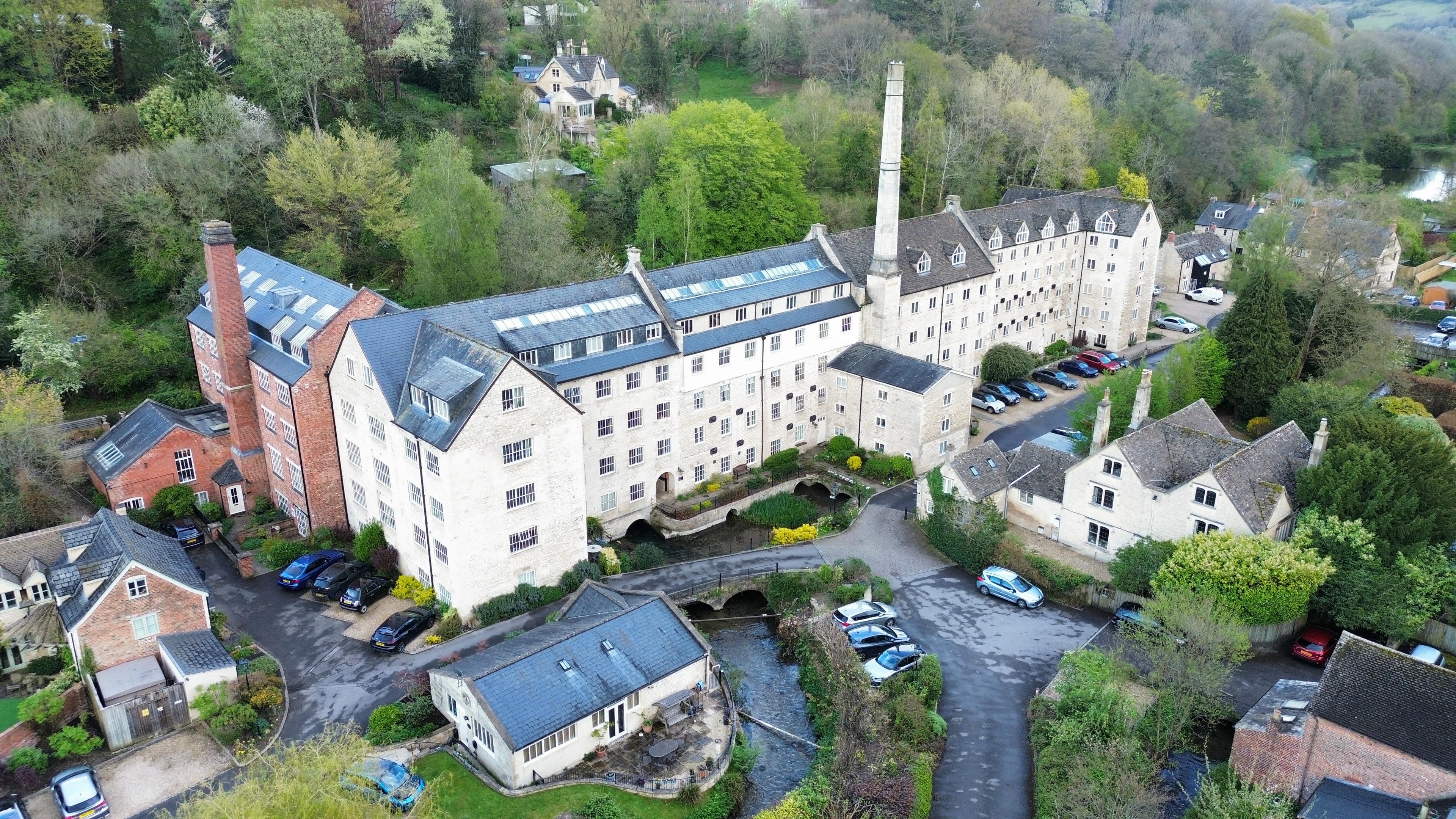
Everything you need to know about aerial drone roof inspections and ACM asbestos surveys — what they involve, why they matter, and what to expect.
Drone Roof Surveys
What Is an Aerial Roof Survey?
An aerial roof survey uses an unmanned aerial vehicle (drone) equipped with a high-resolution camera to capture detailed imagery of your roof from above. Our CAA-licensed pilots fly the aircraft at low altitude, systematically covering the entire roof surface to produce a comprehensive photographic and video record.
The resulting imagery — captured at up to 4K resolution — allows our surveyors to identify defects including cracked or slipped tiles, failed flashings, blocked gutters, chimney deterioration, lead work failures, ridge and hip problems, and any vegetation growth or signs of water ingress.
Why Choose a Drone Survey?
Safer for Everyone
No ladders, no scaffold, and no operatives working at height. The drone does the work, eliminating the risk of falls entirely.
Fast & Cost-Effective
A drone survey can be completed in a fraction of the time of a traditional scaffold inspection, with no erection or hire costs. Most residential surveys are completed within a few hours.
Detailed & Thorough
4K imagery and video captures every element of the roof surface — including areas that would be difficult or impossible to reach safely with traditional methods.
Clear, Actionable Reports
You receive a written condition report supported by annotated photographs clearly identifying any defects, their location, and recommended remedial action.
Who Needs a Drone Roof Survey?
Drone roof surveys are suitable for a wide range of scenarios:
Pre-purchase or pre-sale property inspections
Insurance claim support and documentation
Routine maintenance planning for landlords and managing agents
Commercial building owners requiring regular roof condition records
Properties where scaffold access is impractical or costly
Listed buildings and heritage properties
ACM Surveys & Testing
What Is an Asbestos Survey?
An asbestos-containing material (ACM) survey is an inspection carried out by a qualified surveyor to identify materials within a building that may contain asbestos. Any building constructed or refurbished before 2000 may contain asbestos, and under the Control of Asbestos Regulations 2012, duty holders have a legal obligation to manage the risk.
During a survey, the surveyor inspects accessible areas of the building and takes samples of suspect materials, which are sent to an accredited laboratory for analysis. The results are compiled into a detailed written report, including an ACM register, condition ratings, and recommended management actions.
Types of Asbestos Survey
Management Survey
The standard survey for occupied buildings. It identifies ACMs that could be disturbed during normal occupation and maintenance, so they can be managed safely in place.
Refurbishment & Demolition Survey
Required before any significant refurbishment or demolition work. This intrusive survey locates all ACMs that may be disturbed by the planned works, ensuring safe removal prior to commencement.
Why It Matters
Legal Requirement
Under Regulation 4 of the Control of Asbestos Regulations 2012, duty holders must manage asbestos in non-domestic premises. Failure to comply can result in prosecution and significant fines.
Protecting Health
Asbestos is the single greatest cause of work-related deaths in the UK. Identifying and managing ACMs protects occupants, contractors, and maintenance workers from exposure.
Property Transactions & Finance
Mortgage lenders, insurers, and commercial tenants increasingly require an up-to-date asbestos management report as part of due diligence on pre-2000 buildings.
Common Questions
Frequently Asked Questions
Drone Roof Surveys
How long does a drone roof survey take?
Most residential drone roof surveys are completed within two to three hours, including pre-flight checks, the flight itself, and initial data review. Larger commercial properties may take a half or full day. You will typically receive your written condition report within 48 hours of the survey.
Do I need permission for a drone survey on my property?
In most cases, no special permission is required for a drone survey of your own property. Our pilots hold a CAA Flyer ID and Operational Authorisation, and we always conduct a full site risk assessment before flying. If your property is near an airport or in restricted airspace, we will advise you in advance and obtain any necessary permissions.
What does a drone roof survey report include?
Your report includes a written condition assessment, annotated photographs clearly identifying any defects, their location on the roof, and recommended remedial action. You also receive the full set of high-resolution images and a video record of the inspection.
Can a drone survey be carried out in any weather?
Drone surveys require dry, calm conditions with good visibility. We will not fly in high winds, rain, or low cloud. If the weather is unsuitable on the day of your survey, we will reschedule at no extra charge.
Asbestos Surveys
Does my building need an asbestos survey?
Any building constructed or refurbished before 2000 may contain asbestos-containing materials (ACMs). If you own or manage a non-domestic premises, you have a legal duty under the Control of Asbestos Regulations 2012 to manage asbestos risk. For residential properties, a survey is strongly recommended before renovation or purchase.
What is the difference between a management survey and a refurbishment survey?
A management survey is the standard survey for occupied buildings. It identifies ACMs that could be disturbed during normal day-to-day use, so they can be safely managed in place. A refurbishment and demolition survey is more intrusive and is required before any significant building work. It locates all ACMs that may be disturbed by the planned works, so they can be safely removed beforehand.
How long does an asbestos survey take?
The on-site inspection typically takes two to four hours for a standard domestic or small commercial property. The surveyor then sends samples to an accredited laboratory for analysis. The full written report, including your ACM register and condition ratings, is normally delivered within five to seven working days.
Is asbestos always dangerous?
Asbestos is only dangerous when fibres become airborne — for example when materials are drilled, cut, or disturbed. ACMs that are in good condition and are not likely to be disturbed can often be safely managed in place rather than removed. Your survey report will include condition ratings and clear recommendations for each material identified.
Ready to Book a Survey?
Get in touch to discuss your requirements. We cover residential and commercial properties across the South and Midlands.